



Discuss and clarify asset management and corporate restructuring requirements and objectives before investment by professional investors.
After initial discussions and meetings with founders and a preliminary understanding of the company, Equitix will:
- Briefly describe the company’s opportunities, challenges, and overall situation.
- Identify the key objectives the company aims to achieve through asset management and corporate restructuring.
Examples of potential objectives:
- Establish an efficient management and governance system for the distribution network.
- Develop a market expansion strategy targeting international markets by 2025, including market development and talent acquisition.
- Create a financial and investment strategy encompassing the Board of Directors, internal controls, and effective asset/subsidiary management.
- Define competitive positioning and a well-structured capital structure aligned with market penetration and expansion goals.
- Develop a talent development strategy.
Equitix’s approach to achieving the stated objectives:
a) Internal Survey and In-depth Interviews:
Methodology:
-
Individual In-depth Interviews: Conduct one-on-one in-depth interviews with senior management, functional directors, and department heads.
-
Group Interviews: Conduct group interviews with 5-6 employees from each department.
Deliverables:
-
Comprehensive Pre-Due Diligence Report: Prepare a detailed pre-due diligence report encompassing:
-
Work Environment and Culture: Assess the company’s work environment, values, and overall culture.
-
Team and Human Resources: Evaluate the company’s organizational structure, employee skills, and talent management practices.
-
Processes and Procedures: Analyze the company’s operational processes, internal controls, and decision-making frameworks.
-
Detailed Functional Reports: Provide in-depth reports on each department’s functions, responsibilities, and performance.
-
Technology Infrastructure: Evaluate the company’s technological capabilities, IT systems, and data management practices.
-
Financial and Accounting: Assess the company’s financial health, accounting practices, and risk management strategies.
-
Key Insights:
-
SWOT Analysis: Derive a comprehensive understanding of the company’s strengths, weaknesses, opportunities, and threats.
-
Internal Strategic Alignment: Identify and assess how internal strategic factors can effectively respond to external opportunities.
Report Details:
-
Comprehensive Overview: Provide a detailed 50-70 page report on the company’s current state and its potential for improvement.
-
Prioritization Recommendations: Outline prioritized recommendations for the company to optimize its operations and achieve its goals.
-
Focused Leadership: Empower the Founder/CEO to focus on critical value-adding activities by addressing operational inefficiencies and strategic gaps.
b) Business Development Strategy – Company-Level Strategic Planning
Approach:
-
Leveraging Internal Understanding: Building upon the comprehensive understanding gained from the internal survey and in-depth interviews (Section a), Equitix will collaborate closely with the founders to:
-
Refine Business Strategy: Refine and align the company’s overall business strategy with its current strengths, weaknesses, opportunities, and threats.
-
Define Short-Term and Long-Term Action Plans: Develop detailed action plans for both the short-term (6 months – 1 year) and long-term (3-5 years) horizons, considering market conditions and financial constraints.
-
Strategic Tools and Frameworks:
-
SWOT Analysis: Employ SWOT analysis to systematically evaluate the company’s strengths, weaknesses, opportunities, and threats.
-
IFE and EFE Analysis: Conduct Internal Factor Evaluation (IFE) and External Factor Evaluation (EFE) to assess the company’s internal strengths and external opportunities and threats, respectively.
-
IEM Matrix: Utilize the IEM Matrix to determine the company’s strategic posture (offensive, defensive, conservative, or retrenchment) based on its internal strengths and weaknesses relative to external opportunities and threats.
-
Competitive Position Matrix (CPM): Employ the CPM to evaluate the company’s competitive position relative to its key competitors in terms of strengths and weaknesses.
-
Strategic Choice and Action Plan: Develop a comprehensive strategic choice and action plan outlining the specific strategies and actions to be implemented over the short and long terms.
Key Deliverables:
-
Short-Term Action Plan: A detailed 6-month to 1-year action plan outlining the immediate steps required to address operational challenges and seize market opportunities.
-
Long-Term Strategic Roadmap: A comprehensive 3-5 year strategic roadmap outlining the company’s long-term vision, strategic goals, and key milestones, aligned with market trends and financial projections.
c) Functional Strategy Closely Linked with Finance Department
-
Based on a clear understanding of the company’s business strategy and strong agreement within the BOD/key players/founding team, a financial plan will be created for the fiscal year. This plan will provide a comprehensive picture of the company’s finances, including how much budget needs to be allocated and what funding sources may be required to turn desired actions into a realistic plan that aligns with the company’s resources.
-
Develop a financial plan for the next 5-8 years, covering working capital, capital utilization plan, and company valuation considering the company’s future size
d) Board of Directors:
- Develop a standard organizational chart and capital structure for a joint-stock company, including the Chairman of the Board, members of the Board, shareholders through outstanding shares, options, and ESOP.
e) Build an Internal Governance System:
-
Create a detailed operating payroll budget in collaboration with the Chief Accountant.
-
Employ the GE Matrix to evaluate each product line in terms of cash flow targets and inventory turnover for product strategy.
-
Develop an international standard recruitment plan, budget, and human resource development strategy, encompassing mindset, expertise for each department, management and leadership, supplementary expertise, and strategy.
-
Formulate a comprehensive business, sales, and marketing plan.
-
Develop a procurement, R&D, and production plan.
-
Outline a technology development and ERP plan.
-
Create a capital raising, working capital control, bank relations, investor, or shareholder plan.
-
Establish a plan for collaboration in developing a competitive positioning strategy.
-
Prepare a company profile for each round of equity issuance.
f) Establish a Compensation and Performance System:
-
Develop a comprehensive process for all departments.
-
Implement a compensation and management system based on 3P: Position, Person, BSC – KPI.
-
Create a competency dictionary and a structured 7-level promotion path.
-
Provide training and coaching for middle/senior management personnel.
-
Optimize work performance for each level based on position and title, maximizing the company’s labor productivity.
g) Company Profile Development
- Objective: To facilitate continuous fundraising rounds over multiple years by presenting a future cash flow projection based on growth rates and historical data.
- Company Description: Outline the company’s current products and services, past investment deals, and achievements.
- Customer Pain Points and Solution: Describe the pain points of the target customer segment and how the company’s products or services address them.
- Value Proposition: Clearly articulate the unique value proposition offered to customers.
- Timeliness: Explain why now is the right time for investment in the company.
- Market Size and Potential: Define the Total Addressable Market (TAM), Serviceable Addressable Market (SAM), and Specific Addressable Market (SOM) for the company’s products or services.
- Competitive Landscape: Identify and analyze the company’s direct competitors.
- Products and Features: Provide a detailed description of the company’s products or services and their key features.
- Business Model: Clearly explain the company’s business model and revenue streams.
- Team: Highlight the experience and expertise of the company’s management team and key personnel.
- Financials: Present the company’s historical financial statements and projected financial performance.
- Capital Structure: Outline the company’s current capital structure and any planned financing activities.
h) Tax settlement and building sustainable relationships with government agencies.
- These are the tasks that Equitix will support for founders with the titles of: Member of the Board of Directors, Supervisory Board, optimizing most departments, reporting directly to the Chairman/CEO/BOD.
- If Equitix and the founder can reach an agreement, Equitix will send:
- CV item by detailed timeline.
- Non-disclosure agreement/Information confidentiality agreement.
- Investment agreement and memorandum of understanding/bilateral agreement.
Case Study: FMCG – Logistics – $1 Million Investment in 2017
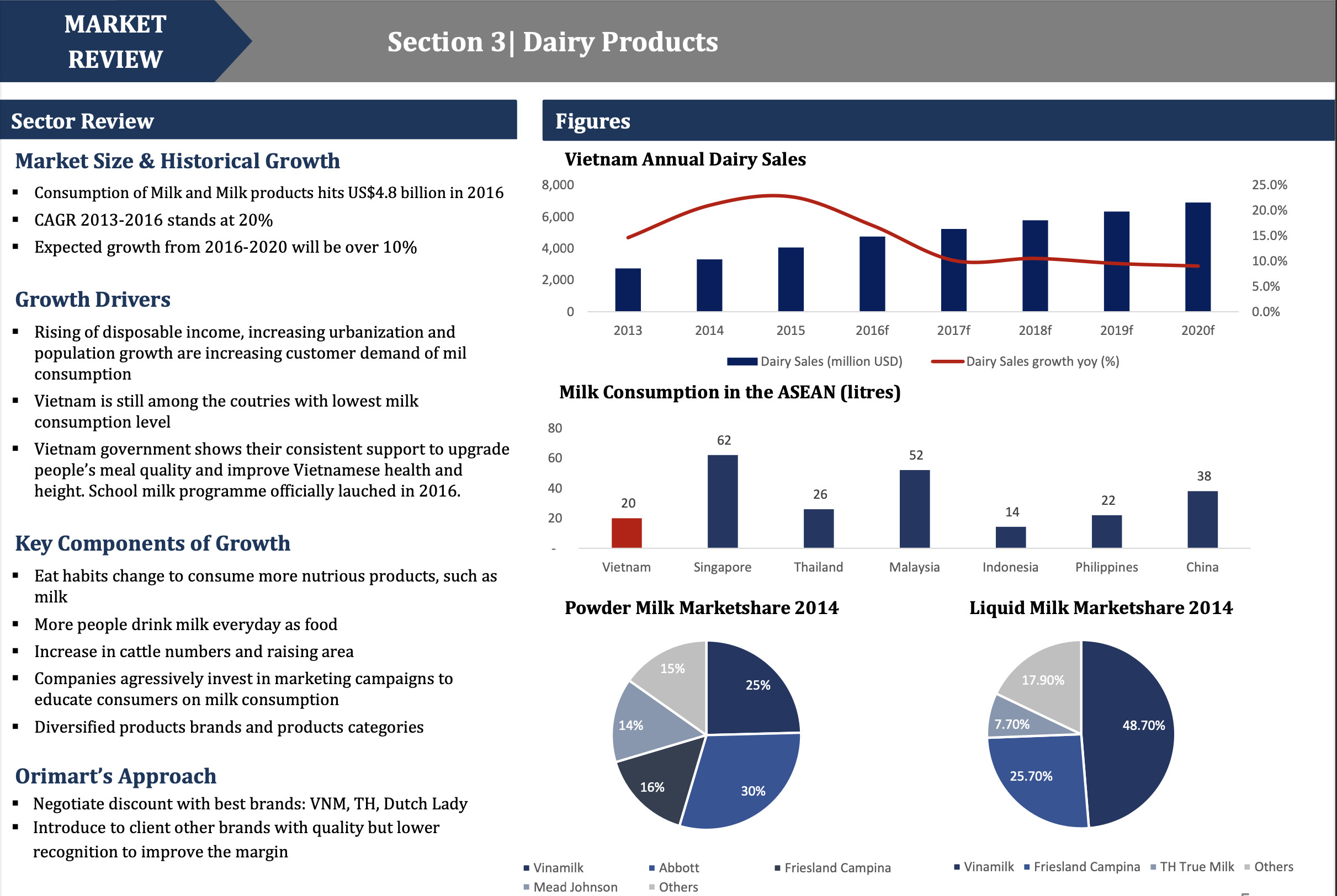
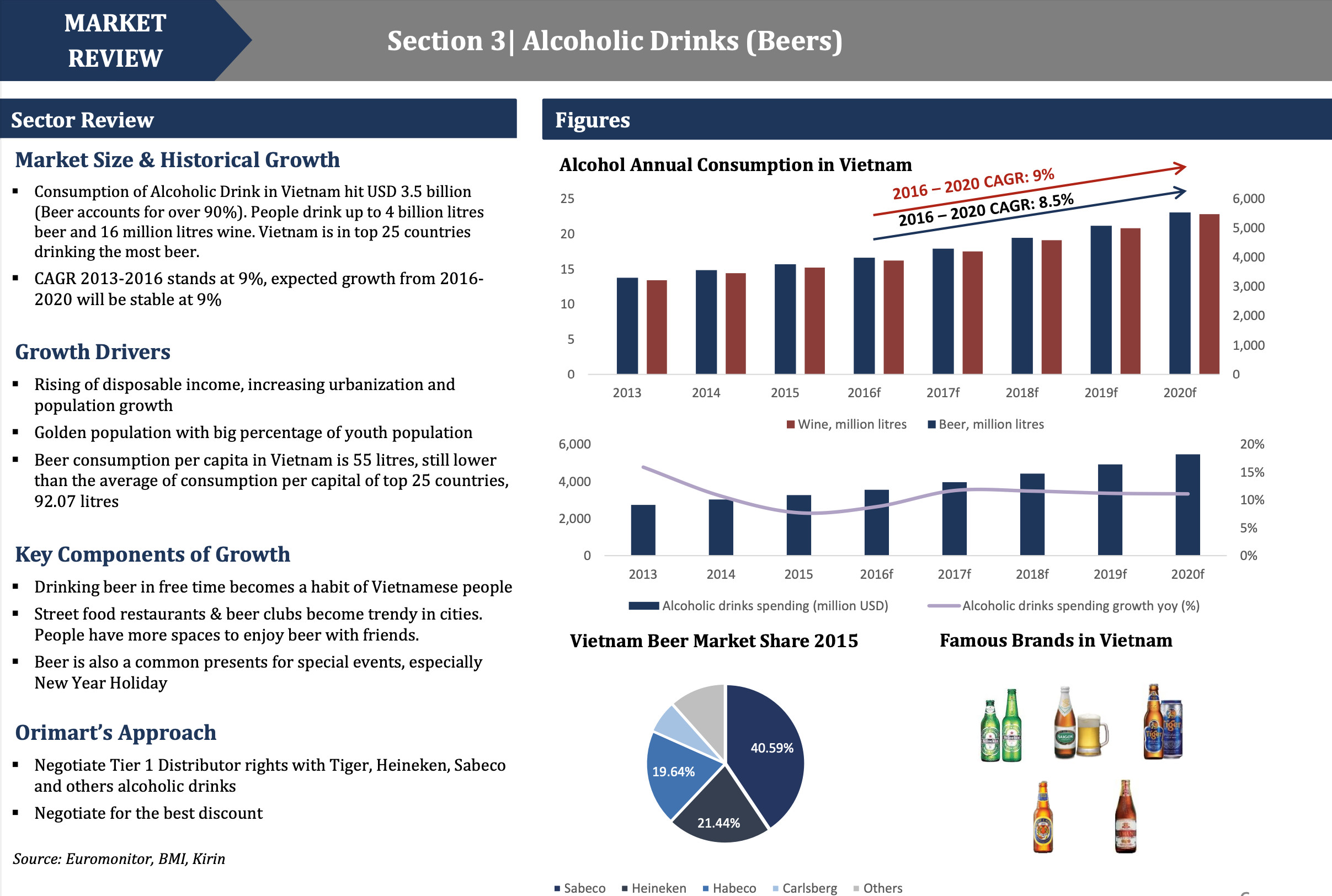
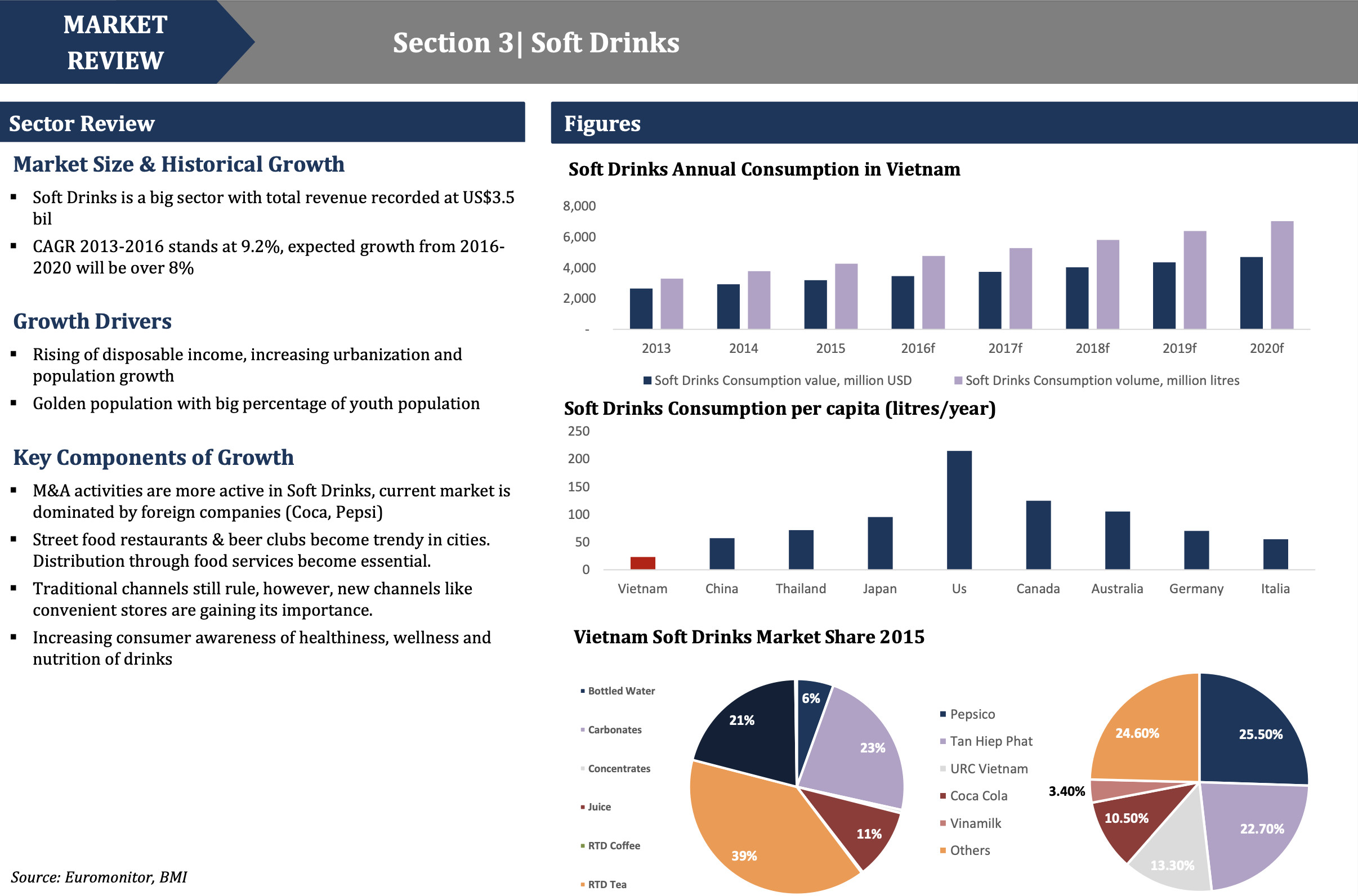
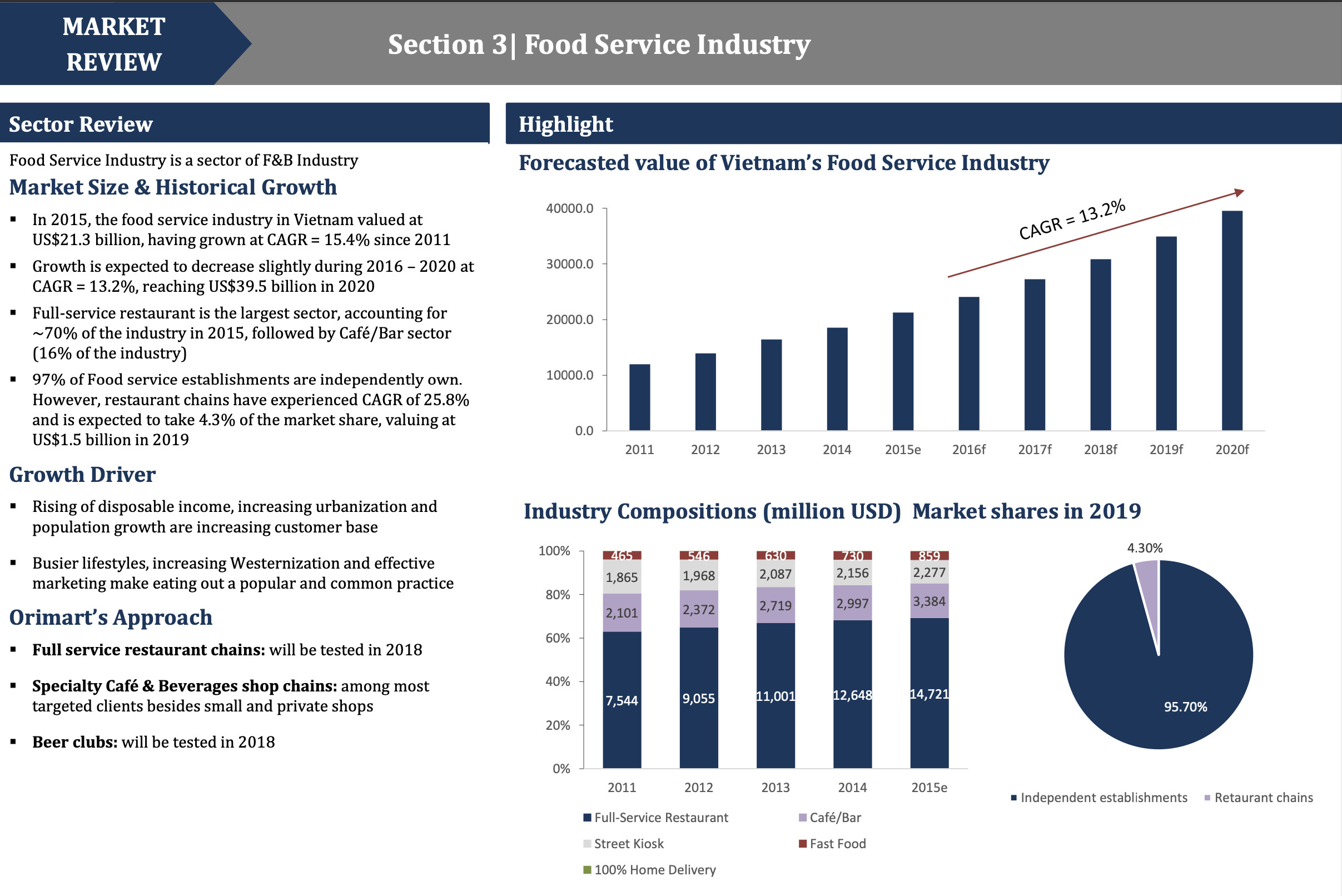
1. Market size analysis:
a) Dairy Product
b) Alcoholic Drinks
c) Soft Drinks
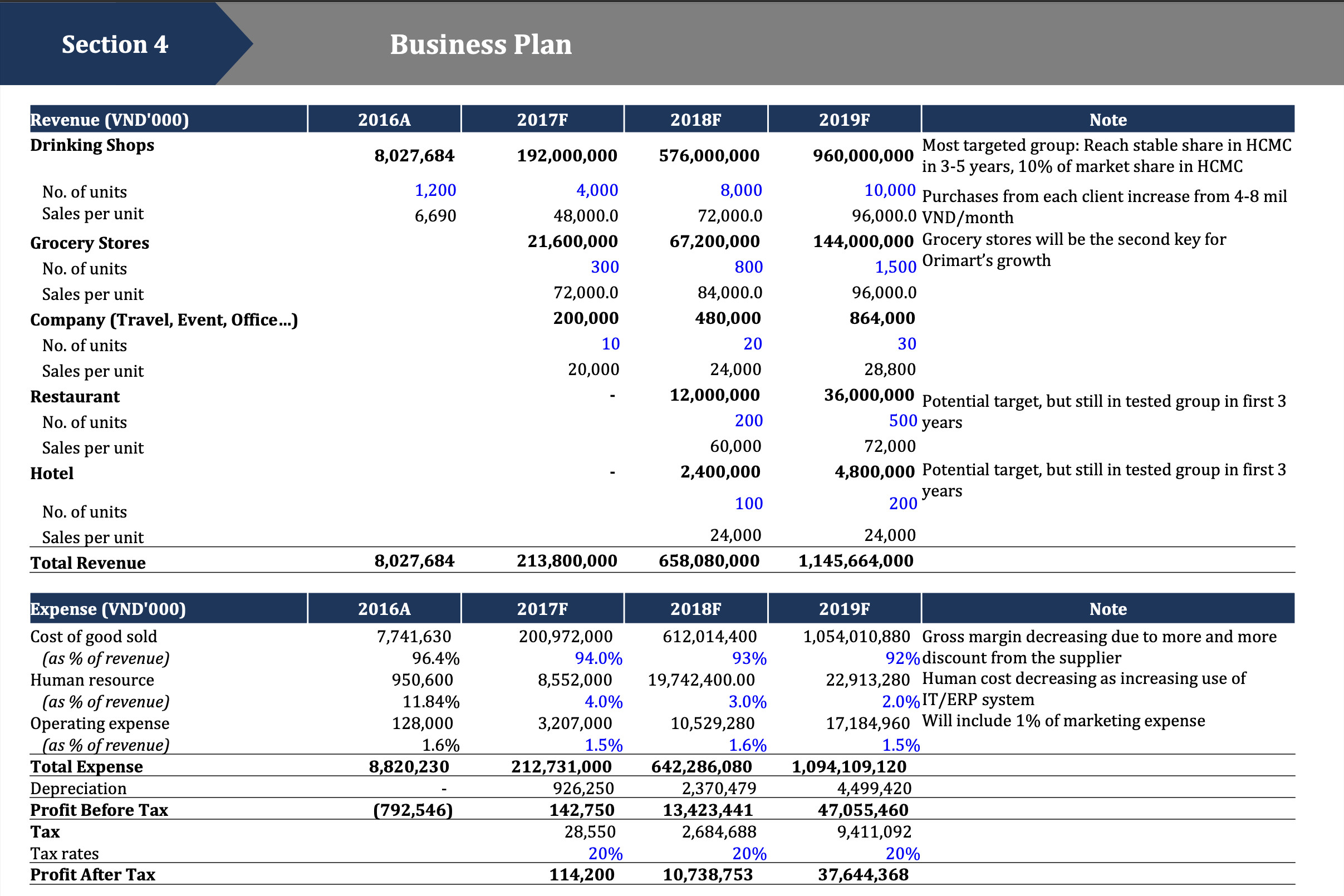
2. Business Plans for the Next Four Years
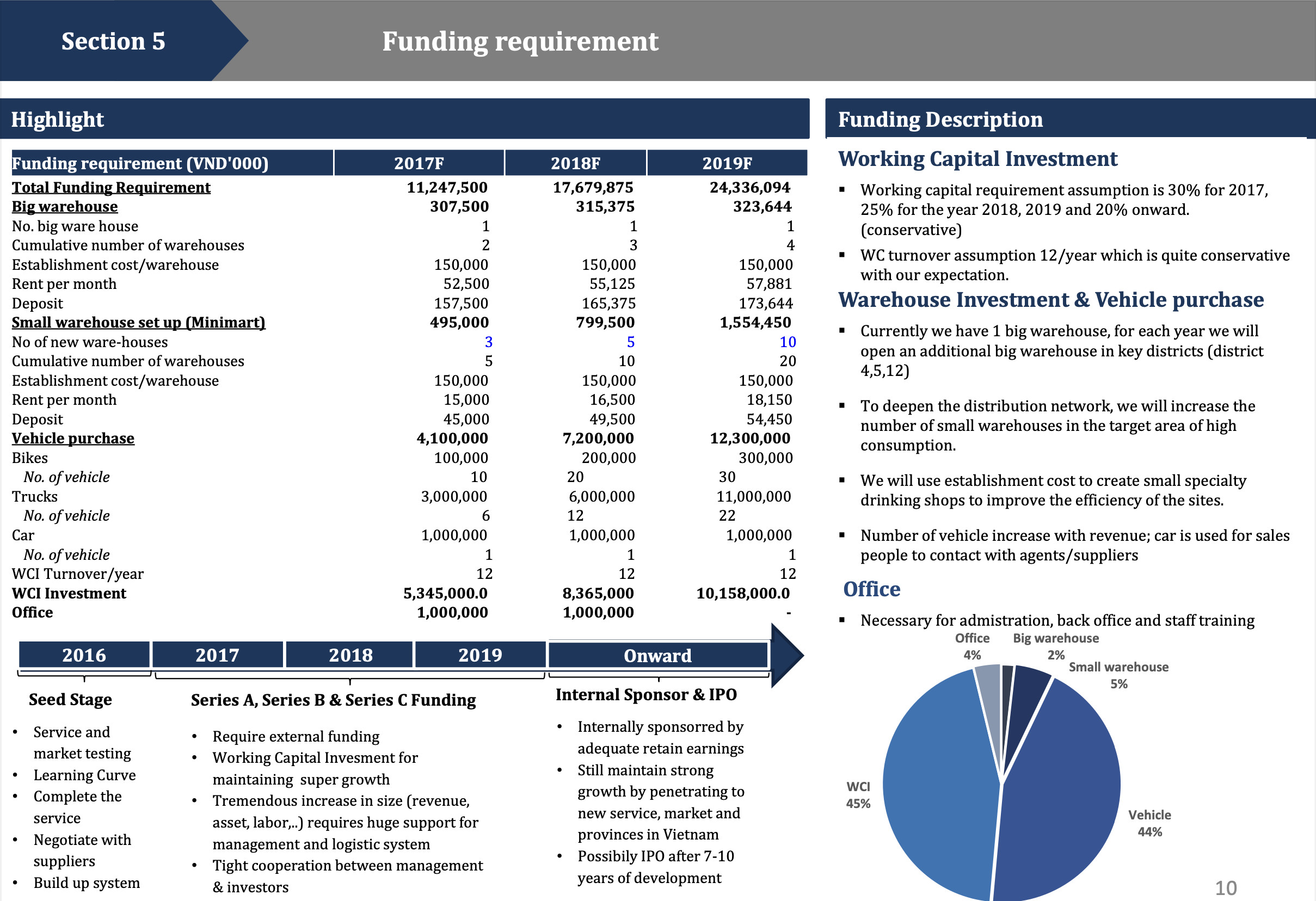
3. Funding Requirements and Plans
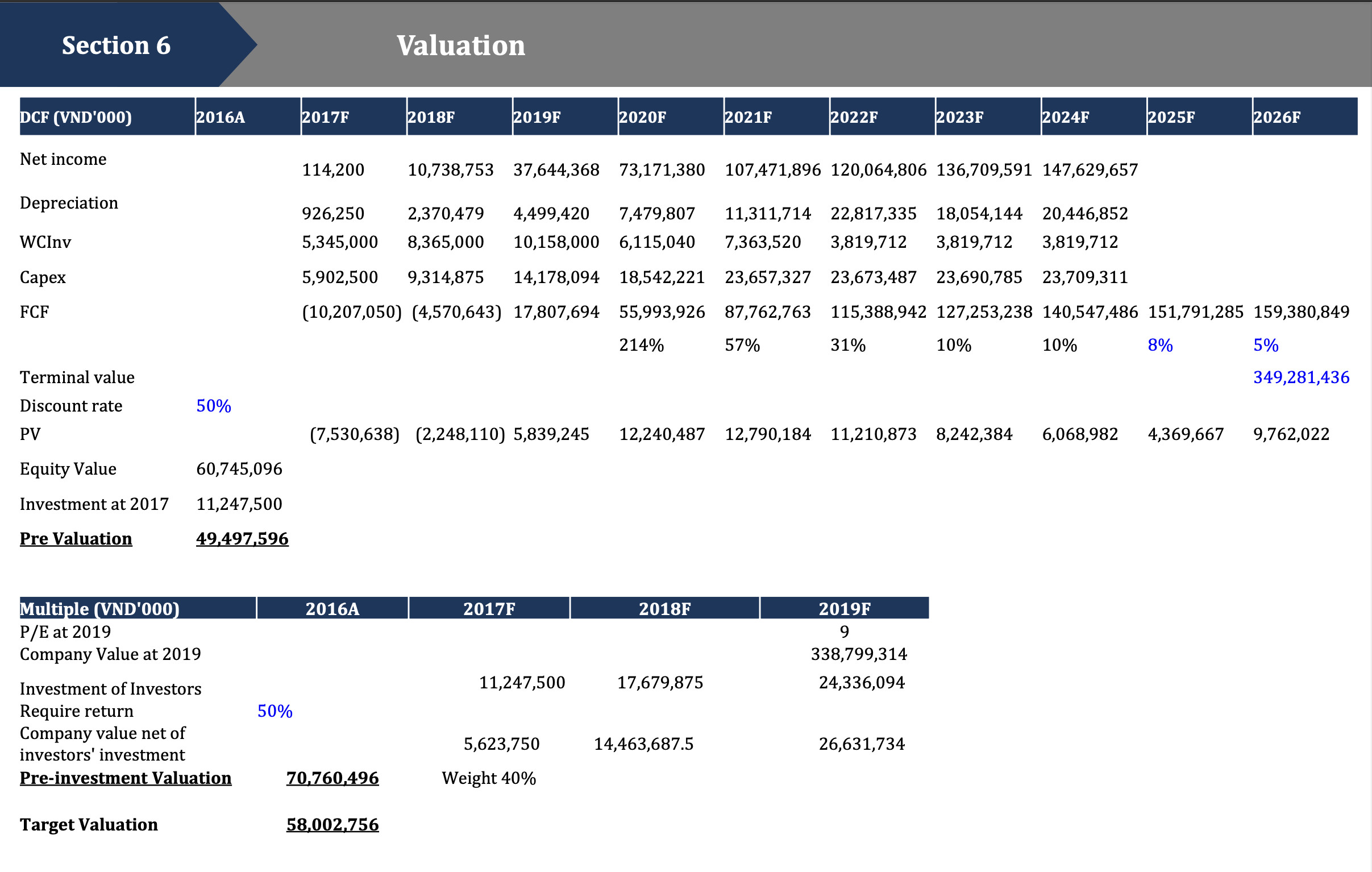
4. Company Valuation by DCF
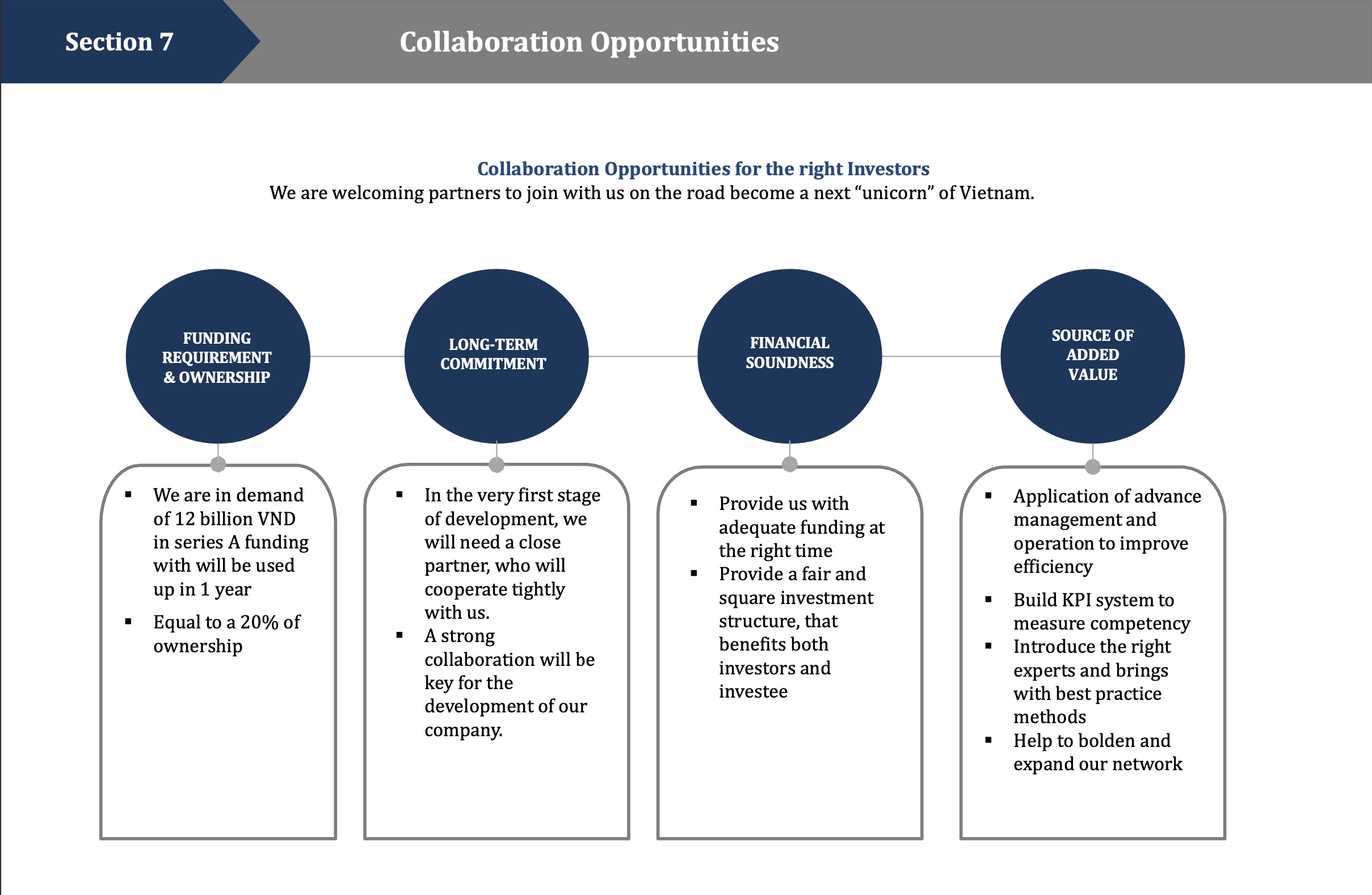
5. Opportunities to Receive Investment from Institutional Investors
Deal – Size: $1 million – $50 million depending on specific requirements:
Within 6 – 9 months, Equitix & Partners., will share 6 – 20 potential investors who already have the need to buy and sell and place orders to buy back the company’s shares from the founders with the following criteria:
-
- Industry
- Investment rate
- Budget
- Purchase ratio
- Investment criteria and investor information
- Prepare full legal and financial documents to carry out the investment transaction, including raising capital or selling the company outright if the founders so desire.
- The exact requirements will depend on the proposal and wishes of the selling party as well as the current status of the company.
- Restructuring, maximizing company value and finding suitable investors with large budgets and professional investment expertise are Equitix’s strengths.
FILL IN THE FORM AND WE WILL RESPONSE WITHIN 24 HOURS