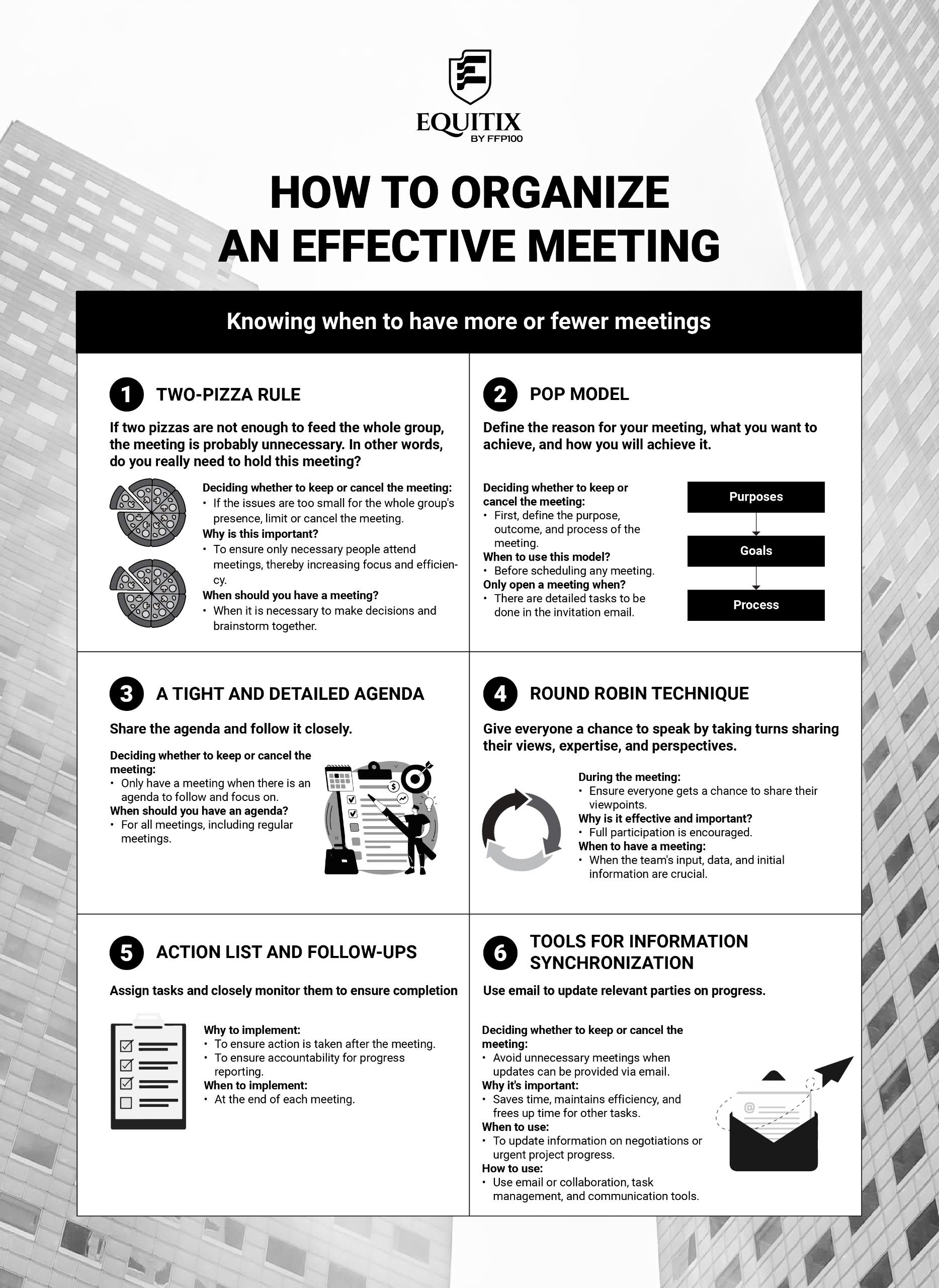
Why Knowing When to Have More or Fewer Meetings is Crucial for Founders and Leaders
The ability to discern when to increase or decrease meeting frequency is a critical skill for founders and leaders. It directly impacts team productivity, morale, and the overall success of the company.
The Importance of Fewer Meetings
- Increased focus and productivity: Employees need uninterrupted time for deep work and problem-solving. Excessive meetings disrupt workflow and hinder creativity.
- Empowerment and autonomy: Fewer meetings can foster a culture of trust and autonomy, empowering employees to take ownership of their work.
- Cost-effectiveness: Meetings can be expensive in terms of both time and resources. Reducing unnecessary meetings can lead to significant cost savings.
The Importance of More Meetings
- Alignment and cohesion: Regular meetings can ensure everyone is on the same page, particularly during periods of rapid change or growth.
- Problem-solving and innovation: Collaborative problem-solving often requires face-to-face interaction.
- Building relationships: Meetings can foster strong relationships among team members, leading to increased trust and cooperation.